So you've got a dietary supplement brand. Maybe it's collagen peptides, maybe it's a probiotic blend that took two years to formulate, maybe it's a fat-burner your co-founder swears by. Whatever it is, you need an FDA registered 3PL for dietary supplements to store it, pick it, pack it, and get it to your customer's front porch without killing the product along the way. That means a warehouse facility registered with the U.S. Food and Drug Administration, running cGMP (Current Good Manufacturing Practice) protocols built for stuff people actually swallow. Not a warehouse that also ships throw pillows and dog toys. The difference matters, and supplement fulfillment brands that ignore it tend to learn the hard way. Your fulfillment partner either meets FDA standards or it doesn't; there's no halfway.
I'll be blunt about something most founders figure out too late. Your formula could be perfect. Labels could be stunning. You could have three influencers ready to post the day you launch. None of that saves you when your warehouse ships the wrong dosage, lets a pallet of gummies bake in a 95-degree corner for a week, or loses track of which lot went where. The FDA sends real letters. They conduct real inspections. And they absolutely will find the weak link in your supply chain if you give them a reason to look.
FDA registration is not decorative. It's not something you frame next to your business license. It is the law.
21 CFR 1.227 spells it out pretty clearly: every domestic and foreign facility that manufactures, processes, packages, or holds dietary supplements has to register with the FDA before a single bottle goes to market. Your 3PL counts. If the warehouse holding your inventory hasn't registered, congratulations, you're both on the wrong side of federal law. Fun, right?
Back in 1994, Congress passed the Dietary Supplement Health and Education Act (DSHEA), which stuck supplements into the "food" category. That classification dragged them under food facility registration rules. So your 3PL's registration has to get renewed every two years through the FDA's FFRM system. Doesn't cost a dime, but skipping the renewal? That's the kind of oversight that ends with a warning letter pinned to your inbox. Or a shutdown. I've seen it happen.
So what does that registration actually get you? Mostly, it puts a pin on the map for the FDA. Now they know where your products physically sit. They can show up and inspect. Your fulfillment partner is officially accountable for how your supplements get stored and handled. And when something goes sideways in this industry (give it time, something always does), the FDA doesn't call your social media person. They go straight to the facility.
Lots of supplement founders hear "FDA registered" and assume that covers everything. It doesn't. Not by a long shot.
Registration is the entry ticket. It tells the government, "Yes, we exist, and we hold dietary supplements here." That's it. The operational muscle comes from 21 CFR Part 111, the cGMP rule written specifically for dietary supplements. We're talking real personnel training (skip the pamphlet, these people need hands-on instruction), facility design that prevents contamination, equipment maintenance schedules, production controls, quality checks, how you label, how you package, and a mountain of recordkeeping that would make an accountant sweat. Every person who touches your product inside that warehouse has to know these rules cold.
And the FDA is not being shy about enforcement lately. cGMP Consulting reported that 21 CFR Part 111 inspection observations jumped 46% from 2023 to 2024. That's 1,083 observations shooting up to 1,578 in a single year. If your 3PL fumbles compliance, guess who gets to explain that to the regulator? (Spoiler: it's you.)
Getting the registration confirmed is table stakes. The real vetting starts when you dig into how the operation actually runs: Monday through Friday, during a heat wave, during a flash sale, during an FDA inspection nobody saw coming.
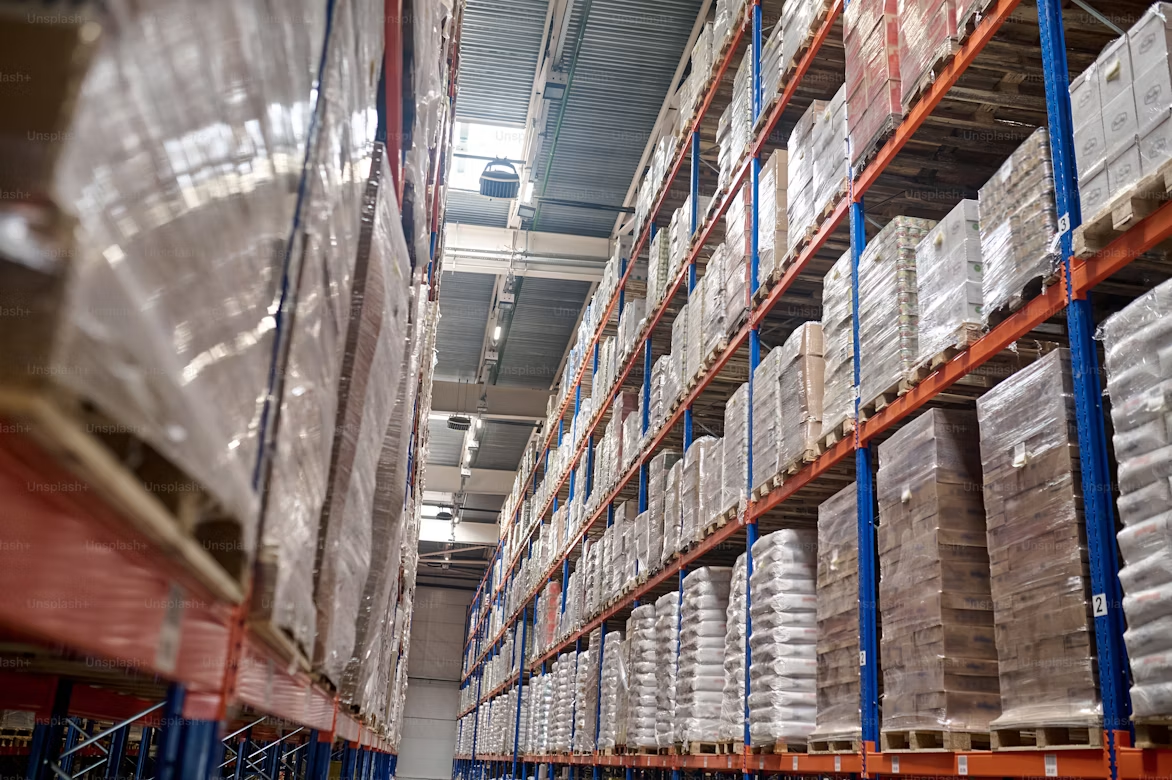
Probiotics are basically divas. Expose them to heat, they die. Gummies? They'll melt into a single horrifying brick that smells vaguely of tropical fruit. Fish oil goes rancid. Protein powder absorbs moisture and clumps into something nobody wants to shake up and drink. Point is, supplements behave nothing like t-shirts or phone cases. They need a controlled environment, and "we keep the AC on" does not count.
A qualified FDA registered 3PL runs climate-controlled warehousing with sensors that measure temperature, humidity, and air quality all day, every day. We're talking continuous readings, not someone walking around with a thermometer at 9 a.m. and calling it good. You should be able to log in and pull those monitoring reports yourself. If you ask your current 3PL for that data and they give you anything other than an immediate "yes, here," you know where you stand.
ShipBots designed its monitoring around nutraceutical and supplement inventory from the start. Each warehouse zone has its own tracking for temperature, humidity, and air purity. When new supplement SKUs arrive, the receiving team photographs every one for visual reference before anything gets shelved, a small detail that pays off when a pick discrepancy comes up three months later. Your products stay at the potency printed on the label. And with a 48-hour dock-to-stock guarantee, your inventory isn't sitting on a loading dock losing potency while someone gets around to checking it in.
Imagine the FDA issues a recall on a specific lot of your magnesium citrate. Right now, today, could you tell them which orders included that lot? Which zip codes those orders shipped to? How many units of that lot are still sitting in your warehouse? If the answer to any of that is "I'd have to check," you've got a problem.
A compliant 3PL tracks batch and lot records for every SKU in the building, no exceptions. They also run first-expiry-first-out (FEFO) shipping, which means the bottles closest to their expiration date go out before the newer inventory. The FDA expects this under cGMP. It's not optional, and it's not a best practice you can skip when things get busy. Honestly, it's what separates "we had a small recall and handled it calmly" from "our PR person is writing an apology on Twitter right now."
ShipBots' WMS attaches lot codes and expiration dates to each SKU the moment inventory gets received. Oldest product always ships first. Nobody has to manually sort through bins or babysit a spreadsheet to make that happen; the software handles it whether the team is thinking about it or not.
Quick gut check: your turmeric capsules are not sitting next to someone else's cleaning supplies right now, are they? You'd be surprised. Plenty of ecommerce fulfillment warehouses cram everything into the same racks. Candles next to creatine. Laundry pods next to elderberry syrup. Nobody planned for it; it just happened because the warehouse wasn't set up for regulated products.
A 3PL handling supplements has to wall that inventory off from everything else. Physically. Different zone, different protocols. The staff working supplement areas suit up with hairnets, gloves, the works. Building layout matters here too; you want airflow designed so nothing drifts in from the candle aisle. Miss any piece of this and an FDA inspector will catch it, write it up on a Form 483, and you'll spend the next six months explaining why your 3PL stored ashwagandha next to scented wax melts.
If compliance had a love language, it would be paperwork. Endless, meticulous, absolutely non-negotiable paperwork.
Your 3PL should have records for every stage: receiving, storage conditions, picking and packing, shipping, deviations, corrective actions. All of it. FDA inspectors don't book appointments like your dentist does. They show up. And when one of them asks for a batch record from three months ago, you can't say "give us until Friday." That documentation needs to be sitting in a filing system, organized and accessible, ready to hand over while the inspector waits.
Vet your prospective partner like you'd vet a business partner (because that's what they are). Get their SOPs on the table. Look at an actual batch record. Find out what their protocol is when something breaks mid-shift. If answers come slow or not at all, you've learned what you needed to learn.
Nobody likes talking about this part, but here's the number you won't find on a pricing sheet: what it costs when things go wrong.
One FDA warning letter. That's all it takes to crater consumer trust over a weekend. Recalls are worse; you lose the product, sure, but you also lose the customers who were buying it. They tell friends. The retailer pulls your brand to protect their own shelves. It cascades. And if the FDA decides your facility (or your 3PL's) was running without registration or cGMP compliance? They'll shut it down. That's not a threat they make and forget about. They actually do it.
Then there's the damage you don't see on a balance sheet. Picture a warehouse running ten degrees warmer than it should. Your supplements sit there, losing potency day after day. That probiotic labeled "50 billion CFU"? It might test at 12 billion by the time the customer opens it. They won't know the science, but they'll know it didn't work. Maybe they don't complain the first time. Second time, though? One-star review. DM to the group chat. Maybe a TikTok stitching your brand with "this did absolutely nothing." You won't find that cost on a pricing sheet. You'll find it in your retention numbers twelve months later.
Oh, and the market? It keeps getting bigger. Grand View Research pegs global dietary supplement revenue at about $209.5 billion for 2025. By 2033, they're projecting $393.56 billion (8.1% CAGR). The U.S. market specifically is supposed to go from $68.74 billion to $131.08 billion. When there's that kind of money on the table, competition shows up fast. The brands that survive will be the ones who can prove they're compliant and their product is what the label says it is. Everyone else gets buried.
A compliant 3PL costs money, no question. But it's the kind of money that keeps everything else from falling apart.
There's a certain type of warehouse that gets into supplements almost by accident: they had space, a client asked, they said yes, and now they're storing protein powder in the same conditions as picture frames. ShipBots is not that warehouse. The operation is GMP-certified, NSF International certified, FDA-registered, and an Inc. 5000 company. They own and operate every facility (no subcontracting your inventory to a building they've never walked through). And there's no long-term contract; it's a month-to-month MSA, which tells you something about how much they trust the operation to retain clients on performance alone.
Receiving, inspection, storage, kitting and assembly, picking, packing, out the door: every step at ShipBots runs under FDA registration with cGMP-aligned SOPs. The WMS powering everything is ShipHero, which handles automated order processing, lot-level tracking, and real-time rate shopping across carriers. These aren't the kind of SOPs that live in a binder nobody opens. They're built into the actual workflow, enforced by the software itself.
One thing that separates ShipBots from most 3PLs: account managers sit in the warehouse. Physically. They can walk over to your inventory and put eyes on it in seconds. When a supplement brand has a question about a lot code or a packing spec, the person answering the phone is standing thirty feet from the product.
Emailing your 3PL to check stock levels is a 2015 move. ShipBots gives you a live dashboard: every SKU, lot code, expiration date, order status, all in one place. The platform currently tracks over 100,000 different products across its fulfillment network. Hook up Shopify, Amazon, WooCommerce, whatever platform you sell on, and orders flow in automatically. No CSVs. No midnight reconciliation. No "let me check with the warehouse and get back to you."
The compliance upside of all that real-time data tends to get overlooked, which is a shame. You catch inventory discrepancies before they become audit findings. Lot-level product movement is traceable if a recall hits. And when an auditor needs reports, you're pulling them in minutes instead of spending a panicked weekend excavating emails your ops manager sent eight months ago and barely remembers writing.
There's this assumption that running a compliant operation means everything slows to a crawl. ShipBots processed over 3 million orders in the last twelve months alone, shipping same-day with a 3pm EST cutoff and 99.9% accuracy. The software pulls real-time rates from UPS, FedEx, DHL, USPS, picks the fastest and cheapest route for each package, and sends it. Weekend orders get processed too, which is unusual for a 3PL at this compliance level.
Because ShipBots has fulfillment centers spread across the country, transit times shrink. Shipping zones drop. You pay less per package and your customer gets their bottle days sooner. That speed really does matter for supplements. Leave a box of softgels in a hot delivery truck for five days and you'll get back a fused-together blob that looks nothing like what your manufacturer shipped. Not exactly the unboxing experience you had in mind.
This one surprises people. ShipBots' Vision AI records the packing process for every order that goes out. Every single one. Customer says they got the wrong bottle? Says it arrived cracked? You don't have to play detective. Pull up the footage, watch the pack-out, see exactly what left the building.
Result: chargebacks go down. Disputes wrap up in days instead of weeks. And you've stacked another documentation layer on top of your cGMP compliance, because now there's video proof that the order was packed correctly. Try getting that from a warehouse that still uses paper pick sheets.
I'm always surprised by how many brands sign a 3PL contract without asking anything uncomfortable first. Don't be one of them. Get specific, get documentation, and don't worry about being annoying.
Get the FDA registration number. If they can't produce it, walk. Ask how they handle 21 CFR Part 111 compliance and what their documentation looks like. Find out when their last FDA inspection was and whether the inspector left them with any Form 483 observations. Ask what their protocol is for a temperature excursion at 2 a.m. on a Saturday. The answers (or the lack of answers) will tell you everything.
A 3PL that can't address these things with confidence and proof isn't equipped for supplement fulfillment. Period.
Means the physical warehouse building has registered as a food facility with the FDA, specifically under Section 415 of the FD&C Act. Supplements count as food (thanks, DSHEA), so 21 CFR 1.227 says any facility that manufactures, processes, packages, or holds them has to register. You re-up every two years. Once you're registered, the FDA has legal authority to inspect that site whenever they want. This isn't something you opt into for marketing points. It's a legal obligation that existed before you launched your brand and it'll exist long after.
Not even close, though I get why people confuse them. Here's the short answer: the FDA never "approves" a dietary supplement before it goes on sale. That's on you, the manufacturer. DSHEA says you're responsible for safety and labeling accuracy. Registration? That's about the building. It puts the facility on record as a place that handles food. What inspectors actually enforce when they walk through the door is cGMP compliance under 21 CFR Part 111, and that's a whole separate set of rules.
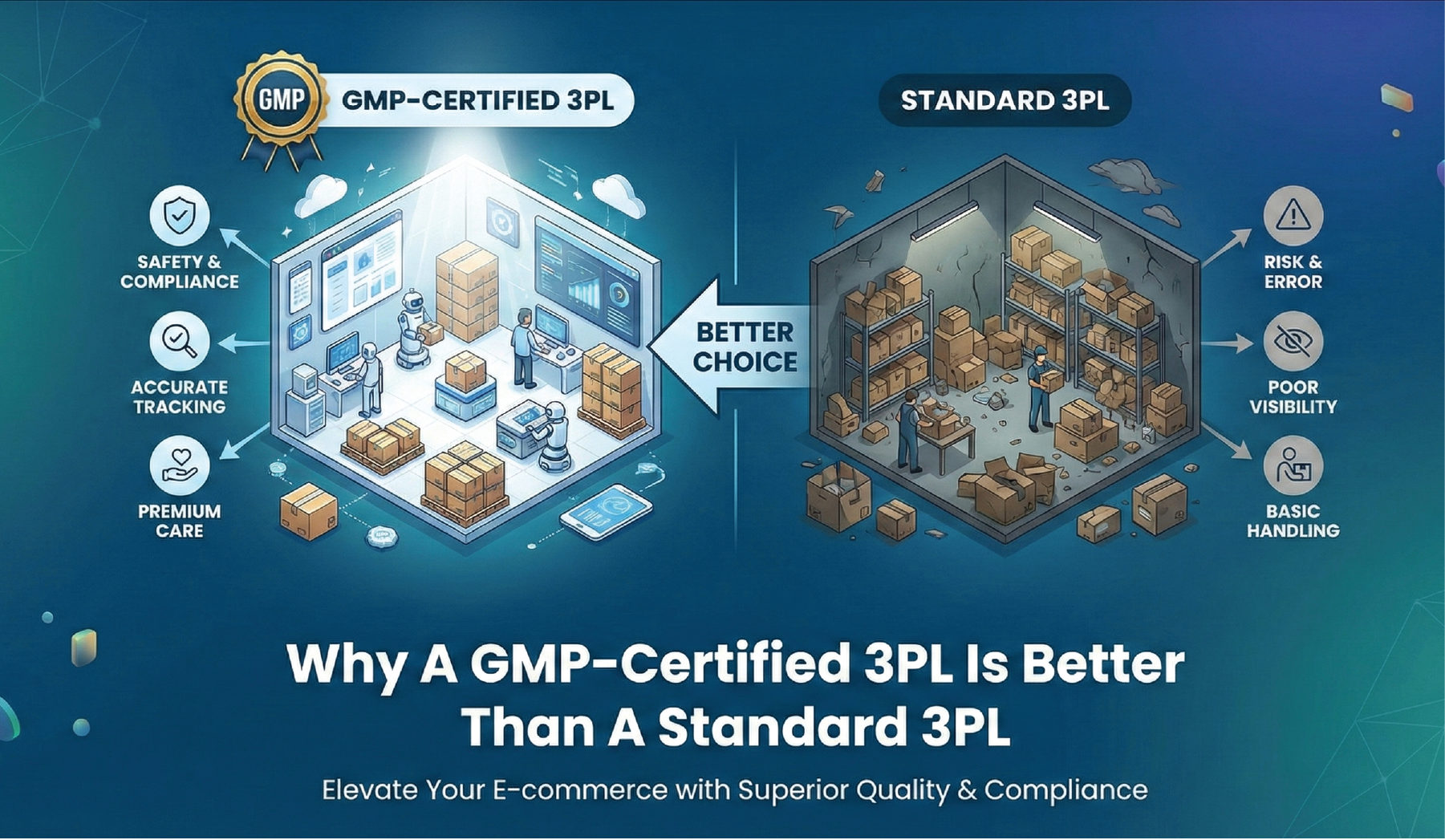
Because a regular warehouse wasn't built for products people eat. Think about what's missing: no climate control tuned for ingestibles, nobody on the floor following hygiene protocols, no lot tracking in the WMS, no documentation setup that survives an FDA inspection. Supplements are food under federal law. The place storing them needs to hit food-grade standards. Skip that and you're gambling with enforcement action, ruined product, and recalls that'll hurt way worse than the money you thought you were saving on cheaper warehousing.
Basically the FDA's operating manual for supplements. It covers how they get manufactured, packaged, labeled, stored; who's qualified to handle them; what the building needs to look like; how equipment should be maintained; what production safeguards need to exist; how quality gets checked; and how everything gets documented. If a 3PL holds your inventory, Part 111 applies to them. And this isn't something you can put off: the FDA's observations under Part 111 spiked 46% between 2023 and 2024. They're actively looking for gaps.
Starts with where the product lives. The facilities are FDA-registered and temperature-controlled, with cGMP protocols baked in from day one. Environmental monitoring doesn't shut off. Supplement inventory sits in its own segregated area. Lot codes and expiration dates flow through the WMS automatically. The team trains on documented SOPs that get revised whenever regulations change (which, lately, is often). Oh, and Vision AI records every pack-out, so there's visual proof backing up the paper trail. Curious how this would work for your products? Get a quote and we'll map it out.
Yeah, it's baked right into the WMS. Every SKU has a lot code and expiration date attached. The system won't let older inventory sit in the back while newer stuff ships out; FEFO (first-expiry-first-out) runs automatically. Net effect: less waste, rock-solid traceability, and audit-ready records that don't require a human to remember to update them. The system just does it.
Yep. Recurring orders run on autopilot once they're set up. Kitting handles monthly supplement packs (starter kits, curated wellness bundles, multi-bottle sets, you name it), branded packaging options are there if you want them, and timed shipments go out when they're supposed to. Some brands even add QR codes on inserts linking to dosage instructions or reorder discounts. You don't have to sit in a dashboard pressing buttons every month. Subscribers get consistency, you get to focus on literally anything else.
Think about every bottle that leaves your warehouse. Your name's on it. Your brand. Your reputation. Two years of formulation, six figures in marketing, a thousand five-star reviews you earned one at a time; all of that hinges on whether the people packing those orders follow the rules when the boss isn't looking. Wild when you think about it that way, but that's the reality of outsourcing fulfillment for a regulated product.
ShipBots runs FDA-registered, cGMP-aligned fulfillment that was built from scratch for regulated products. Temperature-controlled storage. Real-time lot tracking. Vision AI quality control. Same-day shipping. And a warehouse team that doesn't flinch when an auditor walks through the door on a random Wednesday afternoon.
Here's the real question, though: do you actually know your current 3PL's FDA registration number? If you had to pause just now, that's the answer. Request a free quote from ShipBots today and see what compliant supplement fulfillment looks like when someone builds it right.





.svg)






.jpg)
.jpg)







.jpg)

















.jpg)