Cosmetics fulfillment is the warehousing, pick-and-pack, and shipping operation behind every lipstick, serum, and SPF that shows up on a customer's doorstep. For beauty brands, it's also the part of the business where one mistake, a leaking bottle, a melted balm, a missed lot number during a recall, can cost you a customer, a retailer relationship, or a warning letter from the FDA.
The bar is higher than it used to be. U.S. online cosmetics sales are expected to hit $23.48 billion in 2026 and grow at a 6.62% CAGR through 2031 says Mordor Intelligence, and online beauty distribution is projected to grow at 6.26% annually through 2032 according to Fortune Business Insights faster than most retail channels. That growth is pulling thousands of DTC brands, Shopify stores, Amazon sellers, and TikTok Shop operators into a category that now lives under stricter federal oversight than it ever has. If you sell cosmetics online in the U.S., the ecommerce fulfillment services you choose need to do more than pack boxes. They need to keep you compliant, protect your margin, and get products to customers fast enough to earn a repeat purchase.
This is what cosmetics fulfillment looks like when it's done right and what to look for when you're picking a 3PL fulfillment partner that can actually handle beauty. At ShipBots, our Los Angeles warehouse has been shipping beauty, skincare, and personal care SKUs since 2010, and the playbook below reflects what we've seen work.
Cosmetics fulfillment is third-party logistics (3PL) built for beauty products: skincare, makeup, haircare, fragrance, nail, and personal care. It spans the full lifecycle of a unit from the moment it lands at the dock to the moment it's in a customer's hands:
The difference between generic fulfillment and true cosmetics fulfillment is the regulatory and operational layer underneath it. Beauty products are FDA-regulated. They expire. They melt, freeze, leak, and break. They're often subscribed to, gifted, and returned. A 3PL that doesn't plan for those realities will quietly cost you money every week.
The Modernization of Cosmetics Regulation Act of 2022 (MoCRA) is the most substantial expansion of FDA authority over cosmetic products since the Federal Food, Drug, and Cosmetic Act of 1938, and the compliance clock is now running for every brand selling in the U.S. A responsible person must list each marketed cosmetic product with FDA, including ingredients, and provide annual updates FDA, and facility registrations renew every two years.
The FDA also now has mandatory recall authority. If a beauty brand is subject to a mandatory recall, the 3PL must act immediately to freeze inventory and stop shipments. Which means your fulfillment partner needs lot-level visibility in their warehouse management system, not a spreadsheet and a prayer.
Beauty formulas are fragile. Heat destabilizes emulsions, cold separates suspensions, humidity ruins powders, and sunlight degrades activities. A fulfillment center must provide true temperature and humidity control to prevent products from melting, degrading, or losing potency. If your 3PL stores your retinol next to a loading dock in July, you will hear about it from customers.
FEFO: First-Expired, First-Out is the required method for rotating perishable goods, ensuring products with the soonest expiration date are always shipped first. Plenty of 3PLs say they do FEFO. Fewer actually enforce it at the pick-face. If your fulfillment center ships the oldest-unit-in-the-back instead of the oldest-by-date, you will be fielding complaints about expired moisturizer.
Recall readiness means a 3PL has the proven ability to instantly identify, quarantine, and trace a specific lot number, stop affected inventory from shipping, and provide a detailed report of every customer who ever received a product from that lot. The moment a recall hits, you need that capability in minutes, not days.
Here's the checklist we'd use if we were evaluating cosmetics fulfillment from the outside, in order of importance:
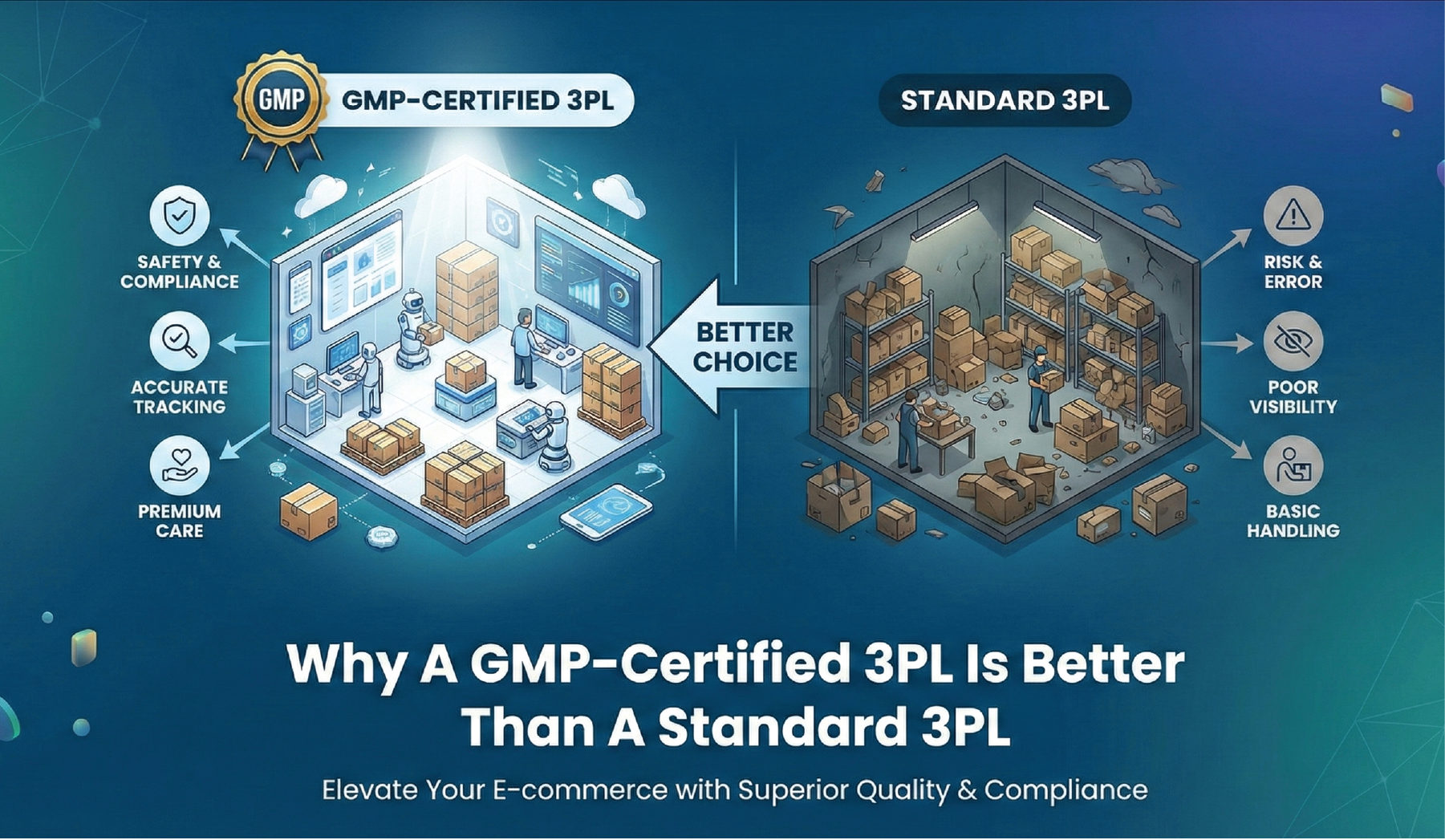
Your 3PL should be an FDA-registered facility. ShipBots is an FDA-registered outsourcing facility, GMP Certified, and NSF International-recognized, which is the baseline for handling cosmetics, supplements, and other regulated SKUs without compromising your brand's compliance position. A 3PL handling cosmetics should demonstrate Good Manufacturing Practices (GMP) compliance, implement validated systems for temperature control, pest control, and sanitation, and maintain records to demonstrate FDA compliance. Ask for the documentation; don't take anyone's word for it.
This is a dealbreaker. Your warehouse management system has to track by lot and expiration at the unit level, enforce FEFO at pick, quarantine on command, and produce a customer-level trace report for any lot. ShipBots runs on ShipHero WMS with real-time inventory visibility, which means you can see lot positions and expiration dates from your dashboard without calling a rep.
Temperature and humidity control aren't optional for serum, fragrance, or anything with actives. If a prospective 3PL can't tell you the temperature range their warehouse holds year-round, move on. Our warehouse fulfillment facilities on both coasts are set up to handle temperature-sensitive beauty SKUs, with dedicated zones for products that need it.
Cosmetics pack damage is expensive. Broken glass, leaked serum, dented palettes and it compounds into refunds, returns, and one-star reviews. ShipBots uses Vision AI pack verification on every order, which records the pack process and catches errors before they ship. We run a 99.999% accuracy rate and 99.9% same-day ship across 3M+ orders a year. For a beauty brand, that translates into fewer "where's my order" tickets and fewer "this arrived broken" claims.
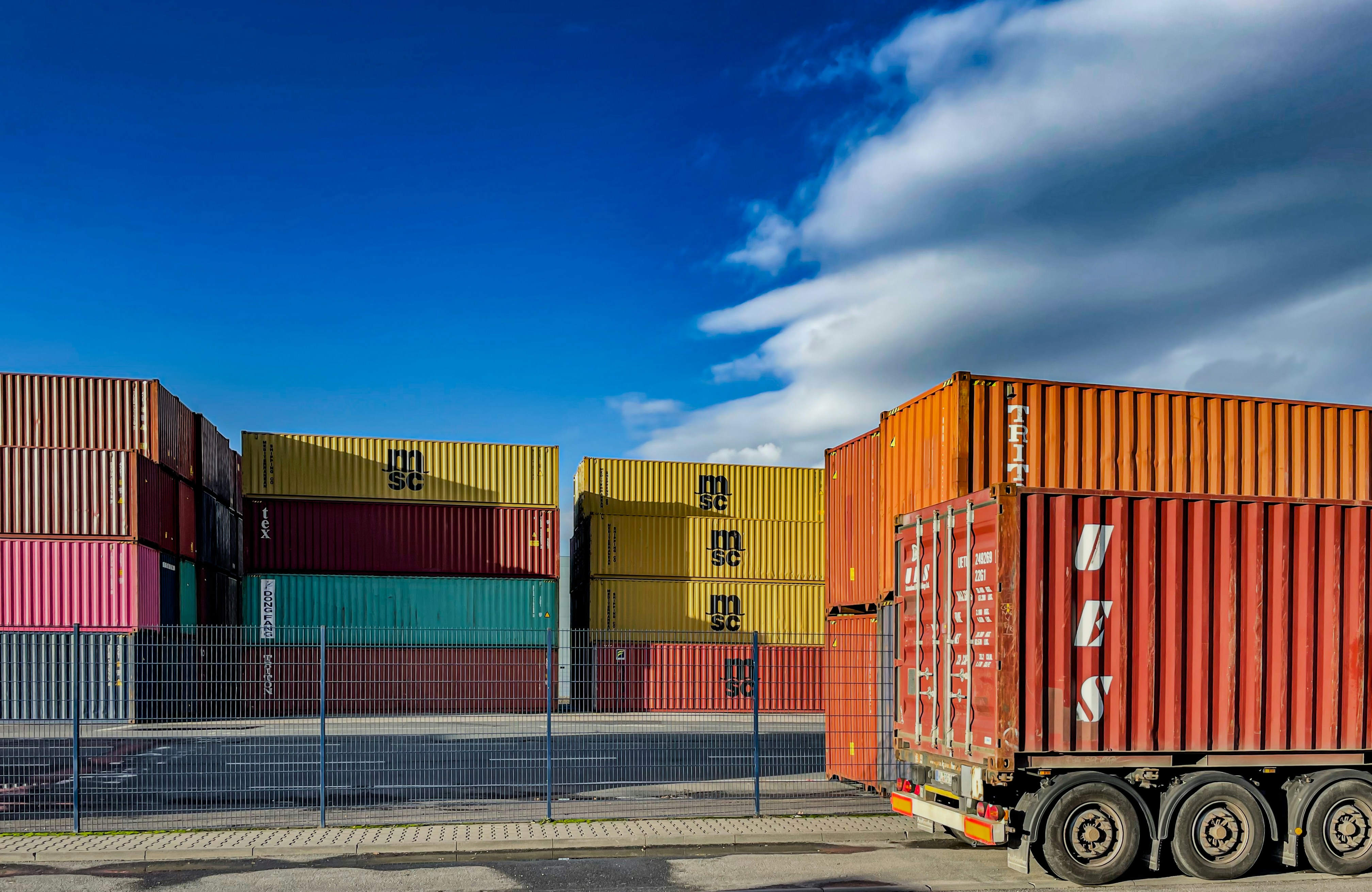
Beauty customers expect fast shipping. Period. That means your 3PL needs to be within a day or two of most U.S. ZIP codes, rate-shop across carriers to keep costs flat, and move fast on same-day cutoffs. Our LA location sits minutes from the Port of Long Beach, an advantage for brands importing from Korea, France, Italy, or anywhere else cosmetics manufacturing concentrates, and our East Coast facility covers the other half of the country in 1–2 days.
Beauty leans heavily on PR mailers, influencer kits, holiday sets, and subscription box fulfillment. If your 3PL treats kitting as an afterthought, your launches will suffer. Good cosmetics fulfillment includes kitting at the SKU level, insert management, custom packaging inserts, and the flexibility to rebuild kits mid-run when you change your mind.
Shopify, Amazon (including FBM/FBA prep), TikTok Shop, Walmart, BigCommerce, WooCommerce, eBay, Magento. If your 3PL doesn't plug into the storefronts you sell through, you'll be babysitting exports forever. ShipBots integrates natively with the channels DTC beauty brands use most.
This is the part most 3PLs get wrong. Technology without a human who actually walks the warehouse floor falls apart during launches, recalls, and peak season. Your dedicated account manager at ShipBots sits inside the warehouse where your inventory lives, not in a call center in a different time zone.
Beauty margins are under pressure. Cost-per-click for Beauty on Amazon was $1.39 in Q1 2026, the fifth-most expensive across Amazon's top 15 categories, and CAC is climbing everywhere. You don't need a fulfillment contract locking you into fees you can't audit. We earn your business every month through performance, not legal lock-ins, no long-term contracts. Simple volume-based pricing, no hidden fees.
What makes cosmetics fulfillment at ShipBots different comes down to three things working together:
Real-time inventory and order visibility, Vision AI pack verification with recorded pack video for dispute resolution, lot and expiration tracking, and carrier rate-shopping that runs automatically on every label. This is the difference between "we'll check and get back to you" and "here's exactly where your inventory is right now."
FDA-registered, GMP Certified, NSF-recognized, minutes from the Port of Long Beach, with coverage on both coasts. International imports land close to the dock. Domestic shipping reaches most of the country in 1–2 days.
ShipBots was built by a founder who ran his own ecommerce business and wanted the fulfillment solution he wished he'd had. Beauty, skincare, supplements, and regulated SKUs have been a core part of what we handle from day one.
For cosmetics brands specifically, that adds up to a partner that can keep you MoCRA-ready, protect your inventory from the environmental stuff that ruins beauty products, ship orders fast enough to earn the five-star review, and stay accountable to you with a real human you can reach.
Yes. Under MoCRA, cosmetics are FDA-regulated, and a responsible 3PL handling cosmetics should be FDA-registered, GMP-aligned, and able to enforce lot tracking, expiration management, and recall procedures. Shipping cosmetics from a warehouse that doesn't meet those standards puts both your compliance position and your customers at risk. ShipBots is FDA-registered, GMP Certified, and NSF International-recognized.
A compliant 3PL tracks every unit by lot number and expiration date inside its warehouse management system, enforces FEFO (First-Expired, First-Out) picking, and can produce a full customer-level trace for any lot on demand. If a recall happens, the 3PL must freeze inventory and stop shipments immediately, which only works if the data is already in the system before the phone rings.
A beauty-focused 3PL should offer kitting and custom packaging as a standard service, not a special project. That includes building kits at the SKU level, managing inserts and marketing collateral, and rebuilding kits when formulas, shades, or partners change. Subscription boxes, influencer mailers, and holiday sets are all core cosmetics fulfillment work at ShipBots.
With a facility footprint on both coasts, most U.S. orders can ship same-day and deliver in 1–2 days. ShipBots runs a 99.9% same-day ship rate and a 99.999% accuracy rate across more than 3M orders a year, with rate-shopping across carriers on every label to keep shipping costs controlled.
Not every SKU needs it, but enough do that you should choose a 3PL capable of providing it. Serums, oils, fragrances, lip products, and anything with sensitive activities benefit from temperature and humidity control. A 3PL warehouse that can segregate climate-sensitive SKUs into appropriate zones protects formula integrity and customer experience.
A generic 3PL picks, packs, and ships. A cosmetics fulfillment partner does that plus lot and expiration tracking, GMP-aligned handling, FDA registration, recall readiness, climate-controlled storage, kitting for beauty use cases, and integrations with the channels DTC beauty brands actually sell on. The gap shows up on the first audit, the first heat wave, or the first recall.
Cosmetics fulfillment in 2026 isn't a storage problem. It's a compliance, speed, and brand-experience problem. The 3PL you pick is either part of the solution or a liability sitting between you and your next retailer meeting. If you want to see what FDA-registered, founder-built cosmetics fulfillment looks like from the inside, get an instant quote or tour our fulfillment centers.




.svg)



.jpg)
.jpg)




.jpg)











.jpg)