
Look, if you're searching "ShipBob alternatives," you're past the honeymoon. Something broke. Or the math stopped working. Or both. Good news, though. You've got real options, and seven of them are worth taking seriously in 2026: ShipBots, ShipMonk, Flowspace, ShipHero, Amazon Multi-Channel Fulfillment, Red Stag Fulfillment, and ShipNetwork. They all cover the basics, like warehousing, picking, packing, and shipping. But how they handle those basics, and the kind of brand each is built around, splits hard once you dig in. ShipBots tops this list for most growth-stage ecommerce operations because of transparent fulfillment pricing, same-day order cutoffs, account managers who actually sit inside the 3PL warehouse and logistics operation, and a Los Angeles facility minutes from the Ports of LA and Long Beach. Already comparing the two head-to-head? The ShipBob vs ShipBots breakdown handles the specs side-by-side.
The rest of this guide gets into what each option actually does well, where each one falls short, what to check before you pull the trigger on a switch, and how a migration plays out in real life. Honest takes only.
Nobody migrates fulfillment for fun. There's always a reason, and from where we sit, it's almost always one of four.
The most common is cost drift. You signed a quote eighteen months ago that bears no resemblance to last month's invoice. Surcharges that weren't on the rate card. Storage tiers that quietly shifted mid-quarter. Receiving fees that doubled, then doubled again. By month thirteen, the spreadsheet you used to sell internal stakeholders on the deal is bleeding two points of margin nobody budgeted for, and you're the one explaining it on the next finance call.
Then you've got the support thing. Tickets sit. Replies arrive in chunks of corporate-flavored boilerplate that may or may not address what you actually asked. Whoever's typing them probably hasn't set foot inside the warehouse where your inventory lives. Most brands accept this until the day something genuinely goes wrong, and then they don't accept it anymore.
A different wall: scaling. The 3PL that handled 200 orders a month starts buckling at 5,000. Cutoffs tighten. Errors compound. The team you used to text now routes you through a queue, and the queue keeps getting longer.
Last reason, and honestly the one we see hurt brands the most: specialization. Or, more accurately, the lack of it. Sell GMP-regulated supplements? Glass-bottled beverages? Temperature-sensitive cosmetics? Your generalist 3PL probably treats every SKU like a t-shirt. Lot tracking, manual. Climate control, optional. FDA paperwork, well, good luck.
Sound familiar? You've got plenty of company. Per Armstrong & Associates, U.S. 3PL revenues are on track to hit $323.4 billion in 2025, and 94% of Fortune 500 companies now work with at least one 3PL. The market's enormous. Switching is normal. Sticking with a partner who's outgrown you is the unusual choice.
Quick reference before the full breakdowns.
ShipBots is built specifically for brands frustrated with what ShipBob gets wrong: opaque pricing, slow support, generic handling for products that need anything but generic. The company runs a Los Angeles fulfillment center sitting minutes from the Ports of LA and Long Beach. That keeps inbound freight from Asia tight and West Coast last-mile shipping on shorter cycles.
A few things actually move the needle here. Order cutoffs sit at noon same-day, so late-morning orders ship that afternoon instead of tomorrow. Receiving turns around in 24 hours, which means pallets through the door before lunch are scannable, sellable inventory by next morning. The dashboard updates in real time. No batch-sync delays. No two-hour lag before a sale shows up in inventory math.
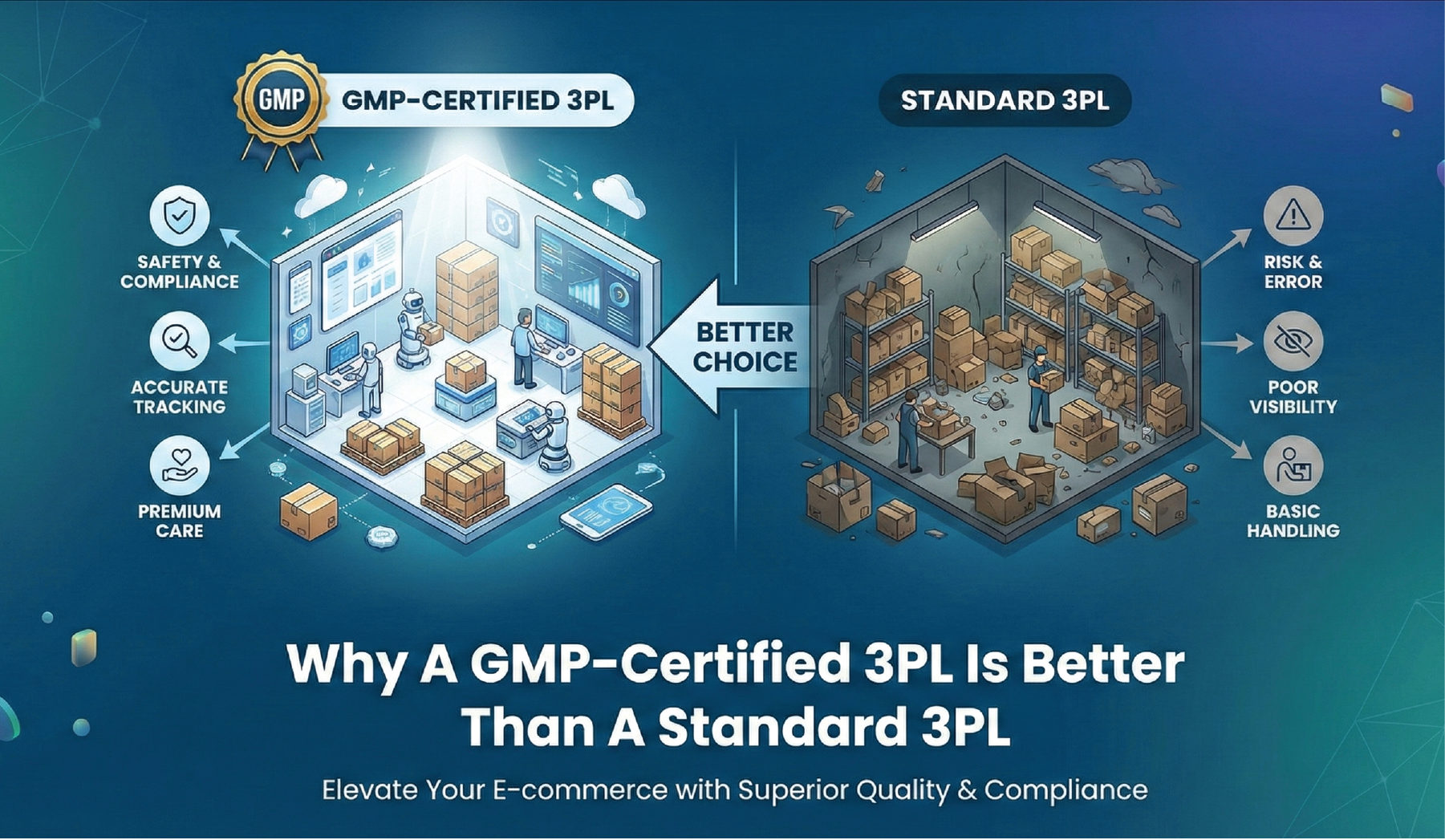
The facility holds NSF GMP Certification, which matters when you sell supplements, cosmetics, or food and need GMP certified fulfillment credentials that survive audits. Every brand also gets a dedicated account manager who actually sits inside the warehouse. Not a customer-success pod three states away. When inventory disappears or a marketplace order triple-fires at midnight, that's the difference between "we'll look into it Monday" and someone walking to your shelf.
Native integrations cover Shopify, Amazon, eBay, Walmart, BigCommerce, Magento, WooCommerce, and TikTok Shop. The specialty workflows where most generalists fall apart? Those too. Subscription box fulfillment with assembly-line kitting at scale, Amazon FBA prep, TikTok Shop fulfillment, and B2B retail fulfillment compliance for stores like Target and Costco.
Best for: Growth-stage DTC brands (1,000 to 50,000 orders/month), regulated products like supplements or cosmetics, multi-channel sellers, and brands shipping heavily to the West Coast or importing through California ports.
Considerations: Single primary facility, so brands prioritizing coast-to-coast distributed inventory may want a network partner instead.
ShipMonk's grown like crazy since 2014. Multiple US warehouses now. Locations in Canada, Mexico, and across Europe. The whole operation runs on a proprietary software platform that pulls inventory, orders, and reporting under one dashboard, which is honestly the main reason brands sign up. Juggling separate tools for ecommerce, subscription, crowdfunding, and B2B gets old fast.
ShipMonk hits its stride with mid-size DTC brands running messy multi-SKU operations. The sticky part is pricing. Same complaint comes up over and over in user reviews: the published rate card doesn't match what shows up on the monthly invoice. Account management fees. Per-order charges. Storage tiering. Stack them all on a busy month and your unit economics go sideways. Pulling an apples-to-apples comparison against another quote takes real work, and you usually need an accountant to do it right.
Flowspace runs a network model, not a warehouse model. Big distinction. Instead of operating their own facilities, they connect brands to a vetted partner network spread across the US, with their software layer handling routing. Order comes in, system picks the closest partner warehouse, customer gets two-day delivery, and you don't have to run multi-warehouse logistics yourself.
The software side genuinely delivers. Real-time inventory across nodes. Smart routing. Decent reporting. The catch is consistency. Service quality lives or dies based on which partner warehouse actually touches your account, and standards vary partner to partner. For specialty handling, things like GMP, temperature control, or complex kitting, a partner network is a lot harder to vouch for than a single dedicated facility you can physically walk through. The model fits brands prioritizing distributed coverage over hands-on control.
ShipHero's got a split personality, and that's the whole point. They sell WMS software for brands running fulfillment in-house. They also operate their own fulfillment warehouses for brands that don't want to. Some brands do both, running their main facility on the WMS while routing overflow to ShipHero's fulfillment arm. It's a useful setup if you're in transition.
That flexibility is the appeal. Brands sitting between in-house and outsourced operations get the most value, especially the ones running hybrid models. Sweet spot is future optionality. Downsides? The fulfillment arm runs fewer locations than the bigger national networks, which limits zone coverage on either coast. Software-only customers report onboarding can drag, especially when migrating off legacy WMS platforms with custom workflows baked in over years.
Amazon MCF is a strange beast. The setup uses Amazon's massive fulfillment network to ship orders from non-Amazon channels: Shopify, BigCommerce, your own DTC site, and most marketplaces. Infrastructure is enormous. Rates stay consistent. Customers recognize the delivery promise.
Catch list is long, though. Branded packaging is restricted, and Amazon's logo shows up on shipments unless you pay for plain-box upgrades (and even those come with limits). Returns route through Amazon. Weekend delivery has historical limits worth checking against your customer expectations. And here's the strategic concern that gets less attention than it deserves. Using MCF gives Amazon detailed visibility into your DTC sales data outside of Amazon's own marketplace, which plenty of brands consider a real competitive risk over time.
The right fit is narrow. Heavy FBA sellers who want one fulfillment ecosystem covering every channel, who are comfortable letting Amazon see their non-Amazon numbers.
Red Stag is the specialist on this list. Furniture. Equipment. Sporting goods. Premium electronics. Anything heavy or fragile or expensive enough that messing it up actually costs the customer relationship. They publish explicit accuracy and damage guarantees in writing, which almost nobody else in this industry will put on paper.
You pay for that. Pricing sits well above mass-market 3PLs, and the specialty focus means high-velocity small-package DTC is the wrong fit. A subscription box brand shipping 8-ounce items would overpay significantly and get capabilities they'd never use. But for brands moving 5+ pound items, oversized SKUs, or genuinely high-value goods where damage and accuracy aren't negotiable, the premium pencils out fast.
ShipNetwork used to be Rakuten Super Logistics. Same operation, new name and new ownership since the Rakuten parent divested the US fulfillment arm a few years back. The footprint stayed national. Focus stayed on 2-day ground delivery coverage. Typical client is still an established mid-market brand with steady, predictable monthly volume.
That last detail matters. Minimum volume requirements can keep smaller sellers out, and onboarding favors larger accounts with multi-thousand-order monthly baselines. If your brand is newer or seasonal, you may not qualify, or you may not get the same attention as the bigger logos on the roster.
A swap is only worth doing if the new partner solves the problem that drove you out. Here's what we tell brands to look at when they're evaluating candidates.
Your CFO needs predictability. Look for published pricing, written cost-per-order math, and a 3PL willing to project costs at higher volumes before you sign anything. If a candidate refuses to put pricing in writing? Yellow flag at minimum. Red flag if they get squirrelly when pressed. ShipBots' order fulfillment services run on a flat structure: bin or pallet storage, pick fees, pass-through carrier rates. That's the whole song.
Dedicated account managers should sit physically inside the warehouse. Not in a customer-success pod three states away. Not behind a chatbot. When inventory disappears or an order triple-fires across three marketplaces at 4 AM, you want someone who can walk to your shelf and check. Anything less and you're playing telephone with your own business.
Day-one demos are easy. The real test is day three of a Black Friday surge with a backed-up Shopify webhook and a customer service inbox on fire. Ask any candidate how their system handled the most recent peak season, and get specifics. Vague reassurance about "scalable infrastructure" is the marketing equivalent of a shrug.
Generalists work fine for vanilla DTC. Brands shipping consumables, supplements, beauty, or food need a partner with documented FDA-registered facilities, nutraceutical fulfillment credentials, lot-level tracking baked into the WMS (not bolted on), and operating standards that survive an audit. Same goes for apparel fulfillment brands managing seasonal SKU explosions and high-volume returns.
A West Coast brand fulfilling out of Pennsylvania pays for that mistake every shipment. Proximity to ports cuts inbound freight; proximity to your customer base shortens outbound zones. Run the actual zone math before you commit to anyone. No marketing copy will tell you what your specific shipping profile costs from a specific facility.
If a 3PL doesn't natively connect to whatever cart, marketplace, or returns app you're running today (or might be running next year), you'll burn weeks rebuilding what already worked. Native Shopify fulfillment plus Amazon, eBay, Walmart, BigCommerce, and Magento support should be table stakes. Returns and subscription apps should layer on top without custom dev work. ShipBots maintains a full library of platform integrations.
Migration costs time. Worth doing only when the math clearly works. A few brand profiles see returns inside the first 90 days.
Subscription box operations top the list. Predictable monthly volume gets crushed by per-order surcharges and missed packing windows, both of which compound across a year of cohorts in ways that catch founders off guard.
Beverage and consumable brands are right there too. Glass packaging, temperature requirements, lot tracking. These break most generalist 3PLs in ways that aren't always visible until something goes wrong on a Friday night before a holiday weekend. A temperature-controlled warehouse with environmental monitoring isn't a premium feature in this category. It's the floor.
Apparel and merch outfits feel switching pain too. High SKU counts. Seasonal spikes. Returns volume that punishes providers without slotting logic and elastic labor. Merchandise fulfillment operations need to flex up for a tour drop or product launch without melting down, and most 3PLs simply can't.
Multi-channel sellers benefit fast. Marketplaces multiply complexity. Amazon prep workflows, TikTok Shop requirements, B2B retail compliance for stores like Target each carry their own paperwork and quirks. Routing all of that through one 3PL saves you the spreadsheet of horrors that comes with coordinating three providers, none of whom talk to each other.
Cross-border brands round out the list. International fulfillment falls apart fast at providers without the right freight relationships. Real international shipping means DDP options, customs documentation, and a port-adjacent warehouse, all running inside one workflow rather than three.
Switching 3PLs sounds scary because nobody talks about it openly. Pulled back from the hype, it's mechanical.
It starts with an inventory audit. Your current 3PL provides counts. The new one preps to receive. Discrepancies surface before truck loading instead of after, which is the whole point of doing it this way. Everybody who's ever skipped this step regrets it.
Integrations come next. Cart, marketplace, returns app, any custom middleware your team built over the years. Everything gets tested in a sandbox before going live. Nobody wants to be debugging a Shopify webhook at 11 PM during cutover week.
Inventory itself moves in waves. Slow-movers go first to validate the workflow without putting revenue at risk. Fast-movers stay at the existing 3PL until the new operation is proven, then swap with minimal SKU downtime. Most brands also run both warehouses live for a couple weeks, splitting orders by region or channel. The new 3PL gets to prove accuracy and speed under real load. The old one winds down without surprises. Costs a little extra short-term, sure, but it's the safest version of the move.
Then comes the cutover. Old contracts close. Final invoice gets paid. Your team finally stops checking three different dashboards, which is its own kind of relief.
The full process usually runs 4 to 8 weeks. Smaller catalogs move faster. Brands with complex kitting or regulated SKUs take longer because every validation step grows a sibling. The ShipBots how it works guide walks through onboarding mechanics in detail.
The strongest ShipBob alternatives in 2026 are ShipBots, ShipMonk, Flowspace, ShipHero, Amazon Multi-Channel Fulfillment, Red Stag Fulfillment, and ShipNetwork. ShipBots is the best fit for most growth-stage DTC brands thanks to flat-rate pricing, NSF GMP Certification, same-day order cutoffs, and West Coast port proximity. Which one wins for you depends on product category, monthly order volume, and where your customers actually live.
Both serve mid-market DTC brands. Both run proprietary software platforms. Both operate multi-warehouse networks. ShipBob has the larger US warehouse footprint of the two. ShipMonk leans into its all-in-one dashboard and supports a wider range of order types under a single system, including ecommerce, crowdfunding, B2B, and subscription. Shared weakness, based on user feedback at both providers, is pricing complexity. Surcharges and tiered fees make true cost-per-order genuinely hard to predict at signing.
Depends entirely on your SKU mix, order volume, and where your customers actually live. Brands shipping heavily to the West Coast or importing through LA/Long Beach typically come out ahead with ShipBots, thanks to zone reduction and lower inbound freight. The flat-rate bin and pallet storage model also wins for brands carrying steady seasonal inventory rather than constant churn. Best move during evaluation: ask for a sample invoice and confirm the line items match the published rate card.
Plan on 4 to 8 weeks for the full thing. Smaller catalogs with clean integrations can finish in 3. Regulated products, complex kitting, or international SKUs push it longer because every validation step grows a sibling. Most brands run both warehouses in parallel for a week or two during the transition, which is the standard play for keeping customers from noticing the swap at all.
Depends on what you're measuring. A national network helps brands shipping evenly across the country. Brands concentrated on either coast, or shipping internationally, often get better unit economics out of a single high-throughput facility than a multi-warehouse split. Carrier rates matter too. Smaller 3PLs that negotiate volume discounts and pass them through close the gap on national-network pricing fast, sometimes with room to spare.
This is where real alternatives separate from lateral moves. Look for documented FDA-registered facilities, NSF GMP Certification, climate-controlled zones with active monitoring, and lot or expiration tracking native to the WMS rather than bolted on after the fact. ShipBots holds NSF GMP Certification and runs dedicated temperature-controlled storage for supplements, cosmetics, and food. Red Stag specializes in the heavy and high-value side of the spectrum for non-consumable categories.
Technically, yes. Strategically, it's complicated. Branded packaging is restricted, returns route through Amazon, and using MCF gives Amazon detailed visibility into your non-Amazon DTC sales data. For brands committed to building a direct customer relationship and protecting first-party data, dedicated 3PLs like ShipBots offer cleaner separation between Amazon and your DTC operation. For brands already deep in the Amazon ecosystem and not worried about visibility, MCF can simplify the stack considerably.
Pull last month's invoice from your current 3PL. Then request an apples-to-apples quote from candidates based on the same SKU set, order volume, and shipping profile. Numbers cut through marketing copy fast. Follow-up move: ask each candidate for a sample invoice from a comparable brand to verify the pricing structure actually holds at scale. If they refuse or redact too much, that tells you something on its own.
Switching fulfillment partners is real work, and pretending otherwise is how brands end up regretting the choice six months in. The decision rewards homework. Get specific about what's actually broken at your current 3PL. Ask the next one to prove it solves that exact thing. Run the numbers on a real month of orders, not on a hero quote drawn up by sales. Talk to someone you trust who's already made the move.
For most growth-stage ecommerce brands, especially those selling regulated products, importing through California ports, shipping heavily to the West Coast, or running multi-channel operations across Shopify, Amazon, and TikTok, ShipBots stands out as the strongest direct alternative on this list. Flat-rate pricing, in-warehouse account management, NSF GMP Certification, and full-channel ecommerce fulfillment coverage tend to solve the specific pain points that drive most ShipBob departures. The why ShipBots overview breaks down what brands actually get on day one of the switch.
Send your current invoice and your last 30 days of order data, and we'll come back inside 48 hours with a written cost projection. Get a quote here. No pressure, no canned pitch, no surprise fees waiting in the fine print.


.svg)





.jpg)
.jpg)







.jpg)

















.jpg)