The best subscription box fulfillment companies in 2026 are ShipBots, ShipMonk, Flowspace, ShipHero, Amazon Multi-Channel Fulfillment, Red Stag Fulfillment, and ShipNetwork. Each one covers the same basics: kitting, packing, and shipping recurring orders on a set schedule. What separates them is how they handle the parts that actually break subscription operations, batching hundreds of identical orders at once, keeping packaging on brand, and hitting the same ship date every cycle without fail.
A late box once might get a shrug from a subscriber. A late box twice, and you're running a churn machine instead of a subscription business. Good subscription box fulfillment protects the one thing that keeps people subscribed: a box that shows up on time, every time, looking exactly like it's supposed to. The global subscription box market is on track to hit roughly $49.7 billion in 2026 and $101.81 billion by 2030, so the competition for keeping subscribers happy is only getting tighter.
This guide compares the seven strongest subscription-ready 3PL logistics partners for 2026, breaks down what actually makes one "the best," and covers what to ask before you sign anything. The full mechanics behind receiving, kitting, and shipping cycle after cycle are covered in the subscription box fulfillment guide, from inventory receiving to peak season prep.
A generalist 3PL can pick, pack, and ship a one-off order just fine. Subscription boxes ask for something different. The same combination of items has to get assembled the same way, for hundreds or thousands of subscribers, on a cycle that can't slip.
That difference shows up in a few specific places.
Most subscription boxes need kitting, taking multiple SKUs and combining them into one curated unit. Picture a beauty box brand with 3,000 subscribers. Picked one order at a time, that's 3,000 separate trips through inventory. Batched instead, it's one assembly-line run with far fewer chances for a mispick.
Subscribers expect their box on roughly the same day every cycle. A 3PL with tight, predictable order cutoffs protects that promise. One with vague or shifting cutoffs puts your "ships on the 15th" commitment at risk.
The unboxing moment does marketing work whether you plan for it or not. Providers built for subscription brands support branded boxes, custom inserts, and handwritten notes without treating each request as something special.
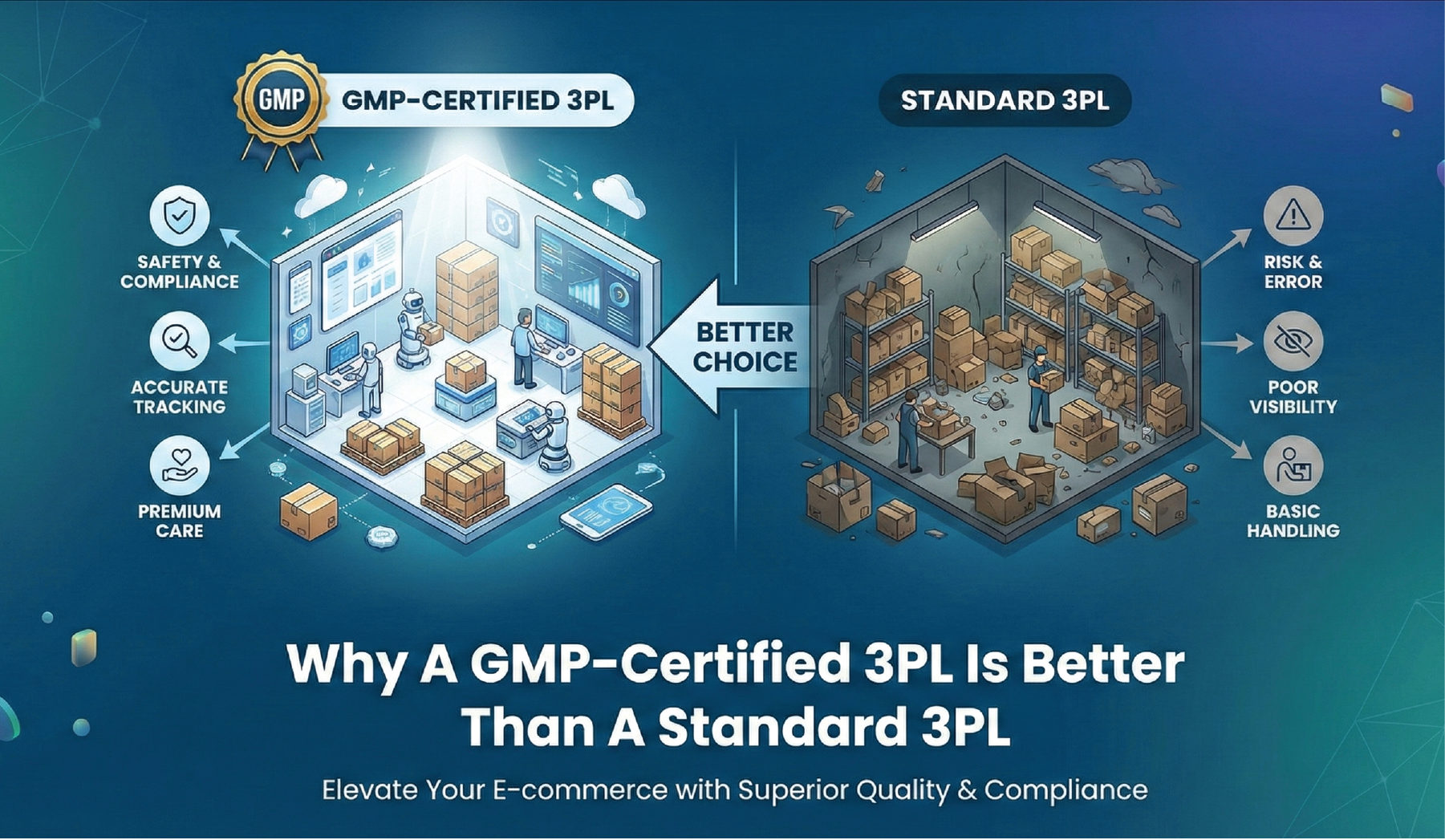
Supplements, cosmetics, beverages, and apparel each carry their own handling rules. A partner without documented nutraceutical fulfillment credentials or GMP certified fulfillment processes will treat a bottle of capsules the same way it treats a t-shirt. That gap tends to surface at the worst time, during an audit or a damaged-shipment claim.
ShipBots is built around the exact problem subscription brands run into: assembling the same box correctly, over and over, without the process breaking down as volume climbs. The company runs fulfillment centers on both U.S. coasts. Its Los Angeles facility sits minutes from the Ports of Los Angeles and Long Beach, which matters for any brand importing components before assembly.
A few things stand out for subscription work specifically. Batches of identical orders run through an assembly line instead of one-at-a-time picking, so a 1,000-subscriber cycle gets processed in one pass instead of a thousand repeated trips. The order fulfillment services built around this include branded packaging, custom kitting for seasonal or themed boxes, and Vision AI recordings of the packing process, so a brand can review exactly how a specific order was assembled if something goes wrong.
Pricing runs flat: bin or pallet storage with pass-through carrier rates and no long-term contract. Every account gets a dedicated manager who works inside the warehouse locations in person, not a rotating support queue three states away. For brands selling supplements or cosmetics, the facility holds NSF GMP Certification and offers temperature-controlled fulfillment warehouse storage for sensitive SKUs.
Best for: growth-stage subscription brands scaling past a few hundred boxes a month, especially ones selling regulated or temperature-sensitive products.
Considerations: brands wanting inventory spread across many regional warehouses instead of two coastal hubs may prefer a network model.
ShipMonk runs multiple U.S. warehouses plus locations in Canada, Mexico, and Europe, all connected through one software platform that combines inventory, orders, and reporting for ecommerce, subscription, crowdfunding, and B2B accounts. That combination is the main draw for brands juggling several order types at once.
The recurring complaint in user reviews is pricing complexity. Account fees, per-order charges, and storage tiers stack up in ways that can make the published rate card look different from the actual monthly invoice. Getting an apples-to-apples quote against another provider takes real work.
Flowspace runs a network model instead of owning its own facilities. Orders route to whichever partner warehouse sits closest to the customer, with software handling the routing and inventory visibility across every location. That setup is genuinely strong for wide geographic coverage.
The tradeoff is consistency. Service quality depends on which partner facility touches a given account, and standards vary between them. For specialty handling like GMP compliance, temperature control, or complex kitting, that variability is harder to vouch for than one dedicated facility you can walk through yourself.
ShipHero sells warehouse management software for brands running fulfillment in-house, and it also operates its own fulfillment warehouses for brands that don't want to. Some brands run a hybrid: main volume on the software, overflow routed to ShipHero's fulfillment side.
That flexibility suits brands sitting between in-house and fully outsourced setups. The fulfillment side runs fewer physical locations than the bigger national networks, which limits coverage on either coast, and software-only customers report that onboarding can drag when migrating off older, custom-built systems.
Amazon MCF ships non-Amazon orders (Shopify, BigCommerce, a direct-to-consumer site) out of Amazon's own fulfillment network. The infrastructure is enormous, and delivery promises stay consistent.
Branded packaging is restricted, and Amazon's logo tends to show up on outbound shipments unless a brand pays for plain-box upgrades with their own limits. Using MCF also gives Amazon visibility into DTC sales data outside its own marketplace, a real consideration for any subscription brand trying to protect its own customer relationship.
Red Stag specializes in heavy, fragile, or high-value items and publishes explicit accuracy and damage guarantees in writing, something almost no one else in the space puts on paper.
That specialization comes at a price well above mass-market 3PLs, and it's the wrong fit for typical subscription box weights. An 8-ounce beauty or snack box would pay a lot more for capabilities it will never use.
ShipNetwork kept its national footprint and focus on 2-day ground coverage after Rakuten sold off the operation a few years back. The typical client is an established mid-market brand with steady, predictable monthly volume.
Minimum volume requirements can keep smaller or newer subscription brands out, and onboarding tends to favor accounts with multi-thousand-order monthly baselines.
A subscription brand's margins depend on predictable per-box cost. Ask for published pricing, written cost-per-order math, and a projection at higher volumes before signing anything. A candidate that won't put pricing in writing is worth a second look.
Dedicated account managers should work inside the warehouse itself, not in a support pod several states away. When 600 subscribers are due a box and only 500 units are on the shelf, you want someone who can check the shelf in person, not file a ticket and wait.
Beauty, supplements, food, and beverage subscriptions each carry different handling needs. Look for documented FDA-registered facilities, GMP certification, and lot-level tracking built into the warehouse software itself, not bolted on after the fact.
Native connections to Shopify, Recharge, Bold, and whatever marketplace a brand sells through should be table stakes. Rebuilding integrations mid-migration is one of the most common reasons a fulfillment switch drags past its planned timeline.
Shipping under 100 boxes a month from a living room works fine. It stops working once the team spends more time on tape and labels than on growing the subscriber base, or once spreadsheet tracking starts causing wrong-item complaints. That's usually the point where the question stops being "can we keep doing this ourselves" and becomes "do we move into a dedicated ecommerce warehouse built for it."
A specialized fulfillment partner solves this with barcode-scanned pick lists, established batching workflows, and negotiated carrier rates a solo operation can't access on its own. The U.S. 3PL market reached $323.4 billion in gross revenue in 2025, which shows how normal outsourcing fulfillment has become at every stage of growth, not just for brands shipping tens of thousands of orders a month.
The unboxing moment matters just as much as the logistics behind it. A brand leaning into direct-to-consumer fulfillment keeps full control over that experience, from packaging to insert cards to delivery timing, something that gets harder to protect the more hands touch the order along the way.
Nearly 44% of subscription cancellations happen within the first 90 days, so the fulfillment experience in a subscriber's earliest cycles carries outsized weight on whether they stick around. The right partner treats that first box with the same care as the fiftieth.
For most growth-stage subscription brands, especially those selling regulated products or shipping heavily out of the West Coast, ShipBots solves the specific problems that drive most fulfillment switches: unpredictable pricing, generic handling for products that need real specialization, and support that doesn't sit inside the warehouse. ShipMonk, Flowspace, and the rest each have a real place on this list, but the right fit depends on your category, order volume, and where your subscribers actually live.
Every recommendation in this guide comes down to the same test: can a fulfillment partner keep your promise to subscribers, cycle after cycle, without the price or the process changing on you. Send a current invoice or last month's order data, and get a custom fulfillment quote back with a straightforward cost breakdown, no hidden fees, no long-term commitment required.
A regular 3PL handles one-off ecommerce orders well but isn't necessarily built for batch kitting or recurring ship dates. A subscription-focused fulfillment company like ShipBots runs assembly-line batching for identical orders and treats consistent, on-time cycles as the core of the service rather than an edge case.
Costs typically break into storage, pick and pack fees, kitting charges, and shipping, with pricing models ranging from flat bin or pallet rates to per-order tiers depending on the provider. Getting a written, transparent pricing breakdown before signing is the best way to compare real cost across candidates.
Kitting means combining multiple individual SKUs into one packaged unit, the actual box a subscriber receives. Done at scale, it runs as a batch process where hundreds of identical boxes get assembled in a single pass rather than one order at a time.
Yes. Most subscription-focused 3PLs, including ShipBots, work with brands shipping a few hundred boxes a month up through tens of thousands, without the account minimums that some larger national networks require.
The safest approach runs both warehouses in parallel for a cycle or two, moving slower-selling SKUs first to validate the new process before shifting the full subscriber base. Most migrations run four to eight weeks depending on catalog complexity and whether products need special handling.




.svg)





.jpg)
.jpg)






.jpg)














.jpg)